Sketchy Outline: Injecting Artistic Edge into Your Brand
Somewhere between the precision of vector art and the raw energy of a quick pencil sketch lies a specific aesthetic that modern brands crave. It’s that feeling of human touch, of authenticity, and of creative rebellion against the sterile, overly-polished look that dominated the last decade. If you have ever scrolled through your design assets feeling like everything looks too safe or too corporate, you might be looking for a typeface that breaks the mold. Enter Sketchy Outline, a display font that manages to be both structurally sound and delightfully rebellious. It is the kind of creative font that doesn't just sit on a page; it interacts with the viewer, bringing a sense of movement and personality that standard sans-serif fonts simply cannot replicate.
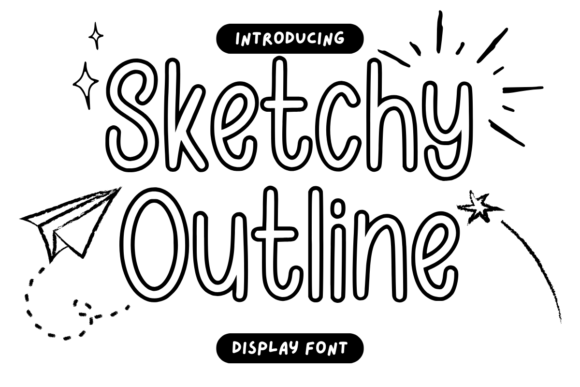
As someone who has spent years navigating the intersection of branding and visual communication, I can tell you that typography is rarely just about legibility. It is about emotion. When you choose a typeface like Sketchy Outline, you are making a deliberate choice to appear approachable, artistic, and distinct. This premium font is designed for those moments when you need to scream "creative" without saying a word. It features a distinct hand-drawn quality, characterized by its hollow interior and rough, sketchy edges. This isn't a polished script font; it is a display typeface meant to grab attention on headers, logos, and merchandise. It bridges the gap between a rough draft and a finished masterpiece, offering a unique visual texture that adds depth to any layout.
The Anatomy of the Sketchy Aesthetic
Understanding why a font works is just as important as knowing how to use it. The visual appeal of this particular typeface lies in its imperfection. In a world saturated with vector-perfect geometric shapes, the irregular lines of a handwritten font or a sketchy display face provide a necessary visual break. The "outline" aspect is crucial here. Because the letters are not solid blocks, they allow the background to become part of the typography. This creates a layered effect that is incredibly useful in modern typography. You can place this text over a busy photograph, a textured paper background, or a solid color block, and the font adapts by letting that underlying element breathe through its hollow center.
This characteristic makes it a versatile tool for editorial design and web design. When used in a large scale, such as a hero image on a website or a magazine cover, the texture of the lines becomes a focal point. It adds a tactile quality to digital screens, tricking the eye into feeling a sense of warmth and craftsmanship. However, it is vital to remember that this is a display font. It is built for impact, not for body text. Its charm is in its details, which would be lost if reduced to small sizes for paragraph reading. Think of it as the lead singer of a band—essential for the hook, but it needs the backing band of a clean serif font or a simple sans-serif font to support the melody of your content.
Strategic Branding and Logo Design
For entrepreneurs and small business owners, choosing a logo font is one of the most high-stakes decisions you will make. Your typography sets the tone for your entire brand identity. If your brand values include creativity, eco-friendliness, artisanal quality, or youthful energy, Sketchy Outline could be the cornerstone of your visual strategy.
Consider a local coffee shop, a boutique clothing line, or an independent bookstore. These businesses thrive on personality. A standard, stiff corporate typeface might send the wrong message, suggesting that the business is generic. Conversely, using this sketch-style font in your logo design instantly communicates that there is a human behind the brand. It suggests that products are curated, ideas are brainstormed, and creativity is valued.
When applying this to your brand identity, consistency is key. You would use the primary sketchy style for your main logo lockup. Then, you might utilize the different weights or styles included in the font family for sub-headers or taglines. For example, if the font family includes a solid version alongside the outline, you can pair them to create hierarchy. Use the outline for the main event and the solid for the supporting details. This ensures your brand looks cohesive across business cards, letterheads, and social media banners without becoming monotonous.
Practical Applications: From Packaging to Social Media
The true test of a design asset is its versatility across different mediums. A font that looks great on a screen but fails in print is a liability. Fortunately, the rugged nature of this typeface makes it incredibly durable across various applications.
Packaging Design: In the world of packaging, shelf appeal is everything. Imagine a matte black coffee bag with the flavor name written in a stark white, sketchy outline font. The contrast is immediate. It suggests a "limited edition" or "special release" vibe. Because the font has a hand-made feel, it pairs beautifully with kraft paper textures, recycled cardboard, and eco-friendly packaging materials. It reinforces the idea that the product inside is crafted with care.
Merchandise and Apparel: Tote bags, t-shirts, and hoodies are walking billboards. Typography on clothing needs to be bold and readable from a distance, but also stylish enough that someone wants to wear it. The bold, graphic nature of an outline font works exceptionally well for screen printing. It avoids the heavy ink coverage of a solid block font, which can make a shirt feel stiff, while still maintaining high visibility.
Social Media Graphics: On platforms like Instagram and TikTok, you have about two seconds to stop a user from scrolling. Standard text often blends into the noise. Using a distinct, sketchy typeface for your headlines or "swipe up" calls to action can disrupt the scroll. It adds a layer of "Instagrammability" to your posts. It works particularly well for quotes, announcements, or sale graphics where you want the text itself to be the main visual element.
Mastering Font Pairing and Hierarchy
One of the biggest mistakes I see in design is the failure to pair display fonts correctly. If you pair a loud, sketchy font with another loud font, you get visual chaos. If you pair it with a font that is too weak, the design feels unbalanced. The golden rule for working with a typeface like Sketchy Outline is contrast.
Because Sketchy Outline is textured, irregular, and high-impact, your secondary font needs to be calm, clean, and highly legible. A geometric sans-serif font is often the perfect companion. Fonts like Helvetica, Futura, or Open Sans provide a neutral backdrop that allows the sketchy headlines to shine without competing for attention. Alternatively, a classic serif font can create a sophisticated "high-low" contrast—think of a luxury fashion brand using a sketchy font for a "Summer Sale" banner paired with a refined serif for the details. It creates a sense of approachable luxury.
When structuring your layout, establish a clear hierarchy. Use the sketchy style for H1 headers only. Use a bold weight of your clean secondary font for H2 sub-headers. Use a regular weight of that clean font for body text. This structure guides the reader's eye naturally from the exciting hook (the sketchy text) to the informative content (the clean text).
Technical Considerations and Licensing
Before you commit to integrating a new typeface into your workflow, you need to consider the practicalities. First, always review the character set. Does the font support multiple languages if you have an international audience? Does it include the specific glyphs and punctuation you need? A high-quality premium font will usually include stylistic alternates—different versions of the same letter—which allow you to customize the look further so that your design doesn't look like a template.
Furthermore, you must be diligent about commercial licensing. This is a common pitfall for small business owners. A font that is free for personal use (like a school project or a hobby) is rarely free for commercial use (like selling t-shirts or using it in a paid client advertisement). Always ensure you have the correct license for your intended use. Purchasing a commercial license not only keeps you legally safe but also supports the type designers who pour hours into creating these intricate letterforms.
Finally, test your typography in context. Don't just look at the letters in a design tool; mock it up. Place the text on a photo of your product. Print it out on a piece of paper. View it on a mobile phone screen. Readability is paramount. If the sketchy outline makes the text too difficult to read at your intended size, you may need to increase the font size or switch to a solid weight for that specific application.
Injecting Personality into Digital Products
If you are in the business of selling digital products—such as PDF guides, online course materials, or social media templates—your typography choices reflect the value of your offer. A generic font makes a digital product feel cheap. A curated, premium font makes it feel like a high-value asset.
Using a creative font like Sketchy Outline for the chapter titles in an eBook or the slide headers in a presentation deck can transform the user experience. It makes the content feel more engaging and less like a dry textbook. It signals to your audience that you care about the details, which builds trust in the quality of your actual content. Whether you are a blogger sprucing up a media kit or a marketer designing a lead magnet, this font adds that necessary "wow" factor that encourages people to keep reading, keep clicking, and keep engaging with your brand.