Broken Tempo: A Quirky Font with Vintage Soul
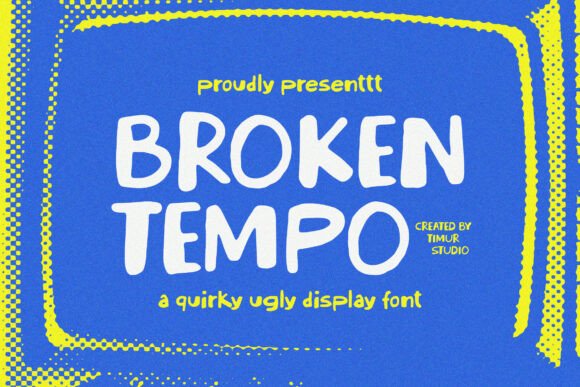
There’s something undeniably magnetic about designs that break the mold. In a world saturated with clean lines and perfect symmetry, a touch of intentional imperfection can make a project feel human, approachable, and instantly memorable. That’s the space where Broken Tempo lives. This isn’t your typical, polished display font. Instead, it’s a quirky, hand-drawn typeface that draws its spirit from the charming, mechanical rhythm of vintage player-piano rolls. Its slightly uneven edges and playful irregularities aren’t flaws; they’re features that inject a lively, offbeat personality into any creative work.
More Than Just a Pretty Typeface
At its core, Broken Tempo is a premium font designed for impact. As a display font, its job is to command attention in headlines, logos, and short bursts of text. What sets it apart is its unique visual texture. Think of the punched holes in an old piano roll—each note has a specific place, yet the overall pattern creates a beautiful, rhythmic flow. Broken Tempo translates that feeling into letterforms. Each character has a subtle, hand-crafted quality, with variations in weight and baseline that prevent it from looking sterile. This gives it a nostalgic warmth, making it a fantastic alternative to more common handwritten fonts or script fonts when you want personality without sacrificing legibility.
This creative font thrives in contexts where you want to evoke a sense of history, craftsmanship, or playful rebellion. It’s perfect for a craft brewery’s bottle label, an indie band’s album cover, or the hero section of a boutique coffee roaster’s website. It communicates that a brand values character and story over mass-produced uniformity.
Practical Applications for Brands and Creators
Understanding where a font like this shines is key to using it effectively. Its strength lies in adding a retro personality to modern projects. Here’s how different professionals can put it to work:
- Brand Identity & Logo Design: For businesses aiming for a distinctive brand identity—like a vintage clothing store, a vinyl record shop, or a retro-themed diner—Broken Tempo can become the cornerstone of their visual language. It works beautifully in logos, wordmarks, and monograms, instantly setting a nostalgic tone.
- Packaging Design: On packaging, this font helps products stand out on a crowded shelf. Use it for product names on artisanal food jars, craft beverage cans, or handmade cosmetic labels. It suggests authenticity and a hands-on approach.
- Marketing & Social Media: In the fast-scroll world of social media, a bold, quirky headline font can stop thumbs. Broken Tempo is excellent for social media graphics, Instagram quotes, YouTube thumbnails, and Facebook ad headlines where you need to grab attention quickly with a dash of charm.
- Editorial & Digital Content: Bloggers and content creators can use it for article titles, section headers, or featured image text to break up the monotony of standard sans serif fonts. It adds visual interest to editorial design without compromising the readability of body text, which should typically be a clean serif font or sans serif font.
- Print & Merchandise: Think beyond digital. This font is fantastic for posters, event flyers, concert tickets, and invitations. On merchandise like t-shirts, tote bags, and stickers, its hand-drawn feel resonates with audiences looking for something unique and non-corporate.
Finding the Right Balance: Pairing and Readability
A common question with a display font like Broken Tempo is, “How do I use it without making my design unreadable?” The answer is thoughtful font pairing. This typeface is designed for headlines, not paragraphs. Its charming irregularities are meant to be savored in small doses.
For a cohesive and professional look, pair it with a neutral, highly readable font for body copy. A clean sans serif font like Montserrat, Open Sans, or a simple serif font like Lora or Merriweather creates a perfect counterbalance. The contrast ensures your main message (the headline) pops with personality, while the supporting text remains clear and easy to read. This contrast is a fundamental principle of modern typography that improves both visual consistency and audience engagement.
Always test your pairings in context. Create a mock-up of your website header, social media post, or packaging label. Check the readability at different sizes—what looks great on a desktop screen might need adjustment for mobile. Ensure the professional presentation of your project isn’t compromised by the font’s playful nature.
Choosing Your Style and Licensing
When you select a commercial font like Broken Tempo, it’s wise to review all the included styles. Does it come with multiple weights (light, regular, bold)? Are there alternate characters or stylistic sets that offer even more creative flexibility? These details expand your toolkit and help maintain brand recognition across various applications, from a delicate light weight on a wedding invitation to a bold weight on a poster.
Equally important is understanding the licensing. A premium font typically comes with a license that specifies how you can use it—whether for personal projects, client work, or physical products for sale. Always read the license agreement to ensure your use is compliant, especially if you’re incorporating it into a client’s brand identity or selling merchandise. This due diligence protects you and respects the work of the type designer.
Broken Tempo offers a fantastic opportunity to inject soul into your designs. It’s a reminder that in the pursuit of great visual communication, sometimes the most compelling elements are those that feel a little imperfect, a little lived-in, and full of character. By using it strategically and pairing it wisely, you can create designs that don’t just look good—they feel genuinely unique.