Agate: The Display Font with an Ancient, Monumental Soul
There’s a moment in every designer’s search for the perfect typeface when you need something that doesn’t just communicate—it resonates. You’re not looking for another clean sans-serif or a predictable serif. You need a font with a story, a weight, a presence that stops someone mid-scroll. That’s where a typeface like Agate enters the conversation. It’s not merely a set of letters; it’s an artifact, a piece of visual archaeology designed for projects that demand a mythical, monumental voice.
More Than Letters: A Tapestry of Ancient Iconography
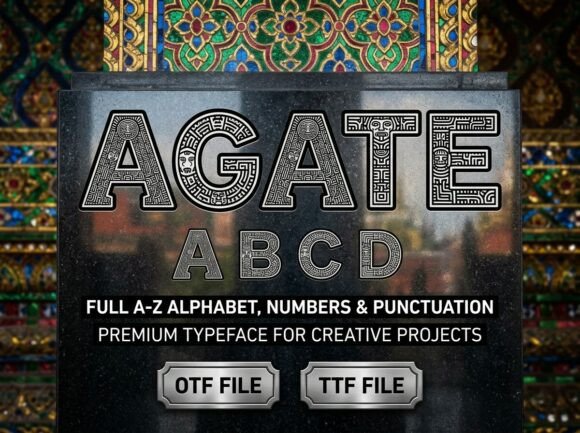
What immediately sets Agate apart is its intricate, hand-drawn interior. Look closely at its bold, slab-serif letterforms, and you’ll discover they’re filled with a rhythmic tapestry of Aztec and Mayan-inspired patterns. Think geometric labyrinths, stylized tribal masks, and symbolic motifs woven into every character. This isn’t a simple distressed texture; it’s a deliberate, complex system of iconography that gives each letter the weight and mystery of a carved stone or a ceremonial artifact. The heavy structural weight grounds it, making it feel both historical and incredibly sturdy—a true premium font for serious creative work.
This unique visual personality makes it a standout display font. It’s built for headlines, logos, and hero sections where you want to make an immediate, impactful statement. The "mythical-and-monumental" soul of the typeface is perfect for evoking themes of exploration, ancient knowledge, and legendary tales. It’s the kind of creative font that can single-handedly define the aesthetic of a project, setting a tone of adventure and discovery from the first glance.
Where a Font Like This Truly Shines: Practical Applications
Understanding a font’s character is one thing; knowing how to wield it effectively is another. Agate’s bold, patterned nature means it’s not for body text or lengthy paragraphs. Its strength lies in strategic, high-impact applications where its details can be appreciated without compromising readability.
Consider these real-world uses where Agate can elevate your project:
- Brand Identity & Logo Design: For businesses rooted in adventure, craftsmanship, or history—like an artisanal jewelry brand, a specialty coffee roaster with a explorer’s ethos, or a boutique outdoor gear company—Agate can form the core of a powerful logo design. Its intricate details make a mark memorable and rich with narrative.
- Packaging Design: Imagine this font on a box for craft spirits, a limited-edition book, or gourmet chocolate. It communicates quality, story, and a sense of something handcrafted and significant, elevating the unboxing experience.
- Digital & Social Media: Create unmissable social media headers, YouTube thumbnails, or podcast artwork. For an independent museum promoting an exhibit or a gaming channel covering historical mysteries, Agate provides instant thematic authority. It’s built for the quick, impactful scan of a digital feed.
- Posters & Editorial Layouts: Use it for event posters, magazine feature headers, or chapter titles in an adventure-themed book. Its monumental scale commands attention on a printed page or a large-format digital display.
- Merchandise & Invitations: From t-shirts and tote bags to event invitations for a themed gala, the font translates beautifully to physical products where its textured detail can be felt as much as seen.
Integrating Agate into Your Design Workflow
Adopting a font with such a strong personality requires a thoughtful approach. Here’s how to use it effectively without overwhelming your designs.
Master the Art of the Pairing. A font this detailed needs a partner that complements, not competes. The best font pairing for Agate is often a clean, neutral sans serif font or a simple serif font for subheadings and body copy. This contrast allows Agate to shine as the hero while ensuring the supporting text remains highly readable. Avoid pairing it with other ornate script fonts or handwritten fonts, which would create visual chaos.
Respect Its Scale. Always use Agate at larger sizes. Its intricate patterns will blur into an unreadable smudge if used too small. Test it at the size it will be viewed—on a phone screen, a printed poster, or a laptop display. The goal is to celebrate its detail, not obscure it.
Consider Color and Background. This font looks stunning in metallic foils, textured finishes, or solid, high-contrast colors against a clean background. A busy background can fight with its internal pattern. Let the letterforms be the focal point.
Review the Full Character Set. A quality commercial font like this often includes alternates, ligatures, and extended characters. Take time to explore what’s included. You might find a specific stylistic alternate for a letter in your logo that makes all the difference.
Building a Cohesive Visual Story
The ultimate value of choosing a font like Agate lies in its power to build instant brand recognition and visual consistency. When used consistently across your marketing assets—from your website header to your email signature to your product tags—it creates a cohesive visual language. This consistency helps your audience immediately recognize your brand’s unique personality, whether they encounter it on social media graphics or a printed brochure.
For web design, use it sparingly but strategically for key headlines that set the mood. In editorial design, it can define the entire feel of a publication section. The key is to commit to the narrative it offers. If your project’s story involves discovery, heritage, craftsmanship, or legend, Agate provides the perfect typographic foundation to tell that story with conviction and style. It’s more than a design asset; it’s a storyteller in its own right, ready to lend its ancient, monumental soul to your next creative venture.