Pudgeloo: The Typeface That Feels Like the Future
There's a moment in every design project where the typography either clicks into place or throws the entire composition off balance. You've probably experienced it—the search for a font that doesn't just sit there looking pretty but actually communicates something about the brand, the product, or the idea you're trying to bring to life. Pudgeloo is the kind of typeface that solves that problem in a way you might not expect. It's soft without being weak, futuristic without feeling cold, and playful without sacrificing structure. If you've been circling around the same handful of modern sans serifs and wondering what else is out there, this might be exactly what your next project needs.
What Makes Pudgeloo Visually Distinct
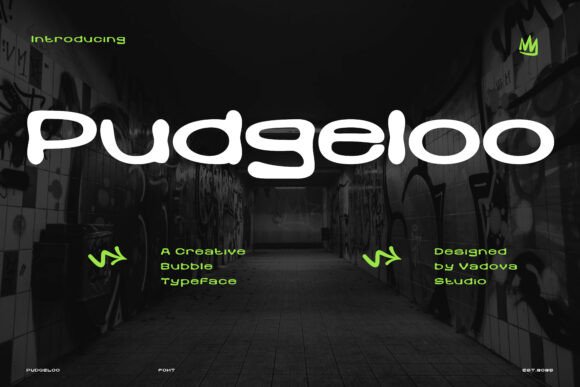
Pudgeloo is a modern display font, and that classification matters. Display fonts are designed to grab attention at larger sizes—think headlines, logos, posters, and packaging—rather than for long-form body text. What sets Pudgeloo apart from other display typefaces is its bubble-like letterforms. Every curve feels intentional, rounded in a way that suggests motion and fluidity. The terminals don't come to sharp points; they soften into gentle arcs. The overall geometry leans toward minimalism, but there's enough personality in the shapes to keep it from feeling sterile.
This combination of softness and structure gives Pudgeloo a unique voice. It doesn't scream for attention the way some bold, angular display fonts do. Instead, it draws you in with an almost tactile quality—the letters look like they could be made of inflated vinyl or smooth silicone. That physicality makes it especially effective for brands that want to convey innovation, approachability, or a sense of creative confidence.
Where Pudgeloo Actually Works in Real Projects
Let's talk practical applications, because a beautiful font is only useful if it fits somewhere in your workflow. Pudgeloo shines in contexts where you need a headline or logo to feel contemporary and distinctive without being overly decorative.
Branding and Logo Design: If you're building a brand identity for a tech startup, a wellness app, a creative agency, or a consumer product aimed at younger demographics, Pudgeloo's rounded forms create an immediate sense of friendliness and modernity. It pairs well with clean sans serif body text, giving you a visual hierarchy that feels cohesive rather than chaotic.
Packaging Design: On product packaging, especially for items in the beauty, food, or lifestyle space, Pudgeloo's soft curves can make a shelf presence feel premium and approachable at the same time. Think about the kind of packaging you'd pick up in a store simply because it looked interesting—that's the reaction this typeface is built to provoke.
Social Media Graphics: For Instagram posts, YouTube thumbnails, or TikTok overlays, Pudgeloo reads well at a glance. Its distinctive shapes make it recognizable even at smaller display sizes, which is critical when someone is scrolling through a feed at speed. If you're a content creator looking for a font that helps your graphics stand out without relying on heavy effects or busy backgrounds, this is worth serious consideration.
Posters and Event Materials: Whether it's a music festival, a product launch, or a gallery opening, Pudgeloo brings an energy that feels current. Its futuristic minimalism works particularly well in contexts where the design needs to feel forward-thinking—tech conferences, design exhibitions, or any event that wants to signal innovation.
Web Design and Blogs: Used sparingly for hero text, section headings, or call-to-action buttons, Pudgeloo can inject personality into a website without overwhelming the overall layout. It's the kind of font that makes a landing page feel designed rather than assembled from generic templates.
Merchandise and Print Materials: On tote bags, stickers, business cards, or editorial layouts, Pudgeloo's distinctive character ensures that even simple designs feel intentional. For small businesses or independent creators selling physical products, the right typeface on your packaging or merch can be the difference between looking amateur and looking polished.
Pairing Pudgeloo With Other Fonts
No font exists in isolation, and Pudgeloo is no exception. Because it's a display typeface with a strong personality, you'll want to pair it with something more neutral for body text. A clean geometric sans serif works beautifully—think fonts with straightforward letterforms and consistent stroke widths. The contrast between Pudgeloo's playful curves and a more restrained body font creates a visual rhythm that feels balanced.
You could also experiment with pairing it alongside a simple serif font for editorial projects where you want a mix of contemporary and classic. The key is to let Pudgeloo do the heavy lifting in headlines and pull quotes while the supporting font handles the paragraphs. Avoid pairing it with other highly stylized fonts, which can create visual noise and make your layout feel cluttered.
When testing font pairings, mock up a few real layouts rather than just looking at the fonts side by side in a specimen sheet. Set a headline in Pudgeloo, write a few lines of body text beneath it, and see how the two interact at actual sizes. Pay attention to the vertical rhythm—do the line heights complement each other? Does the weight distribution feel even across the page? These details matter more than most people realize.
Readability and When to Use It
One honest caveat: Pudgeloo is a display font, which means it's optimized for impact rather than extended reading. You wouldn't set a 500-word blog post in Pudgeloo, and you probably wouldn't use it for fine print on a contract. Its rounded, experimental forms work best at larger sizes where each letterform has room to breathe. At small sizes, some of the subtlety in the curves can get lost, and legibility may suffer.
This isn't a flaw—it's a design choice. Every font has a context where it performs best. Pudgeloo's sweet spot is headlines, logos, short phrases, and display text where you want the typography itself to be part of the message. Understanding this distinction will help you use it effectively rather than forcing it into roles it wasn't designed for.
If you're working on a project that requires both display and body text, consider looking at the full range of styles included with Pudgeloo. Some premium fonts come with multiple weights or stylistic alternates that give you more flexibility within the same typeface family. Reviewing what's included before you start designing saves time and helps you plan your typographic system more intentionally.
Licensing and the Business Side
If you're using Pudgeloo for a commercial project—a client's brand, a product you're selling, marketing materials for a business—make sure you understand the licensing terms. Commercial font licensing varies widely. Some fonts are licensed per user, others per project, and some offer broad commercial licenses that cover multiple use cases. Read the license agreement before you commit, especially if the font will appear on merchandise, in apps, or across multiple client projects.
This isn't just about legal compliance. Using properly licensed fonts is part of professional presentation. It protects your work and your clients, and it supports the designers who create the typefaces we rely on. If you're a freelancer or agency, factor font licensing into your project budgets—it's a legitimate design expense that reflects the value of good typography.
Why Font Choice Shapes Perception
Here's something that experienced designers understand intuitively but rarely explain to clients: the font you choose shapes how people perceive your brand before they've read a single word. Typography carries emotional weight. Rounded, soft letterforms like those in Pudgeloo suggest openness, creativity, and approachability. Sharp, angular fonts suggest precision and authority. Script fonts suggest elegance or personal touch.
When you select Pudgeloo for a project, you're making a statement about the kind of brand or message you're building. You're saying: this is modern, this is creative, this isn't afraid to be different. That alignment between visual language and brand personality is what separates thoughtful design from decoration. It's what makes a logo feel right, a poster feel compelling, and a website feel trustworthy.
Take the time to consider whether Pudgeloo's personality matches your project's goals. If it does, you'll find it's the kind of font that makes everything else in your design fall into place naturally. If it doesn't, that's useful information too—it means you're thinking critically about your typographic choices, which is exactly the habit that leads to stronger, more effective design work.