Kami: A Typeface That Brings Bold Personality to Your Work
There’s a particular kind of font that stops you mid-scroll. It doesn’t whisper—it speaks with confidence, warmth, and a friendly clarity that feels immediately inviting. That’s the experience of encountering Kami, a display font designed to balance boldness with approachability. In a landscape where visual noise is constant, finding a typeface that communicates your message without shouting is a quiet victory. Kami doesn’t just sit on a page; it engages, whether it’s greeting customers on packaging, introducing a blog post, or setting the tone for an entire brand identity. Its strength lies in its versatility—it’s equally at home on a handmade greeting card and a polished corporate presentation, bridging the gap between professional and personal with effortless style.
Understanding Kami's Visual Character
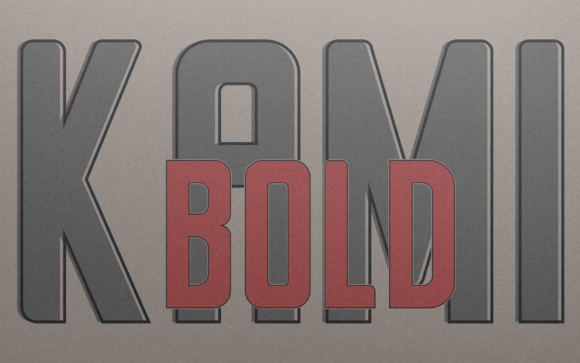
At its core, Kami is a sans-serif display font, but that simple label doesn’t capture its personality. The letterforms are clean and modern, with a geometric foundation that gives them stability and readability. Yet, subtle details—the slightly rounded corners, the balanced weight distribution—inject a sense of friendliness that feels organic rather than rigid. It avoids the cold, sterile feel some modern typography can carry, instead offering a warmth that makes it ideal for projects where you want to connect on a human level. This isn’t a font that demands attention through complexity; it earns it through clarity and charm.
Consider the difference between a typeface that feels like a corporate memo and one that feels like a conversation. Kami leans decidedly toward the latter. Its bold weight ensures visibility, making it perfect for headlines and subheadings that need to draw the eye without overwhelming the rest of your design. The letter spacing is generous enough to maintain legibility at various sizes, a crucial feature when you’re moving between a small social media graphic and a large-format poster. This adaptability is what makes it a valuable asset in a designer’s toolkit—it’s not a one-trick pony, but a reliable companion for diverse creative challenges.
Practical Applications Across Creative Projects
Where does Kami truly shine? The answer is surprisingly broad. For small business owners crafting their brand identity, this font offers a foundation that’s both professional and approachable. Imagine it on a logo for a boutique coffee roaster or a local bakery—it conveys quality and care without pretension. On packaging design, it can guide the customer’s eye to key information like product names or flavor descriptions, ensuring readability even from a distance. The font’s inherent friendliness makes it particularly effective for brands in the lifestyle, wellness, or artisanal food spaces, where a personal touch is part of the value proposition.
For content creators and marketers, Kami is a workhorse for digital assets. Its clean lines make it a strong choice for website headers and blog titles, where first impressions are formed in milliseconds. On social media graphics, it cuts through the clutter with decisive clarity, whether you’re announcing a sale, sharing a quote, or promoting an event. Think of an Instagram story with a bold Kami headline over a vibrant background—it’s immediately readable and conveys energy. In email marketing, a well-chosen font can improve engagement, and Kami’s friendly aesthetic can make a newsletter feel less like a broadcast and more like a note from a friend.
The applications extend into print and merchandise with equal effectiveness. Event invitations gain a modern yet welcoming vibe. Posters for community events or local markets benefit from its bold presence. Even editorial layouts in magazines or lookbooks can use Kami for pull quotes or section headers to create visual interest and break up body text. For those creating digital products like planners, worksheets, or e-books, this font can define the visual style, making the content feel cohesive and professionally designed. It’s a creative font that doesn’t limit your imagination but rather supports it across a multitude of mediums.
Making Strategic Typography Choices
Choosing a font is a strategic decision, not just an aesthetic one. The right typeface should align with your project’s goals and the message you want to send. Kami’s strength is in projects that require a balance of professionalism and personality. It’s not the right choice for a formal legal document or a luxury brand seeking an air of exclusivity and tradition—there, a sophisticated serif font might be more appropriate. But for a startup, a creative agency, a podcast, or any venture that wants to appear confident yet accessible, Kami is a compelling option.
A key part of using any display font effectively is considering font pairing. Kami’s clean, geometric nature pairs well with a variety of other typefaces. For body text, you might choose a classic, highly readable serif like Garamond or a simple sans-serif like Lato to create a harmonious contrast. The goal is to let Kami command the headlines while supporting text remains unobtrusive. Always test your pairings in context. View them at the actual size they’ll be used, on the intended medium—whether that’s a phone screen, a printed brochure, or a billboard. Check for visual hierarchy: does the headline naturally draw the eye first? Is the body text comfortable to read in longer paragraphs?
Another practical consideration is the range of styles included with the font. Many premium fonts come with multiple weights (Light, Regular, Bold, Black) and styles (Italic, Condensed). Exploring these can unlock new creative possibilities. Perhaps a lighter weight of Kami works better for a subtitle, or an italic style adds emphasis to a call-to-action. Don’t overlook these variations; they provide nuance and flexibility within a single typeface family, helping you maintain visual consistency while still introducing variety.
Building a Cohesive Visual Presence
Consistency is the bedrock of strong brand recognition. When you use a font like Kami across your various touchpoints—your website, business cards, social media profiles, and packaging—you create a visual thread that ties everything together. Customers begin to associate that distinct typographic style with your brand, fostering familiarity and trust. This doesn’t mean every piece of communication must look identical, but there should be a recognizable family resemblance. Kami’s distinct personality can become a core element of your brand’s voice, helping you stand out in a crowded market.
Ultimately, the best font is one that serves your project’s needs and resonates with your audience. It’s worth taking the time to experiment. Download a trial version if available, test it with your actual content, and see how it feels. Does it capture the tone you’re aiming for? Does it communicate your values? A font like Kami, with its blend of boldness and friendliness, has the potential to become more than just a design asset—it can become a trusted part of your creative toolkit, adaptable enough to grow with your projects and help you present your ideas with clarity and character.