Groovy Heart: A Font Pairing That Feels Like a Love Letter
There’s a certain magic in typography that can’t be faked. You know it when you see it—the kind of typeface that doesn’t just sit on the page but practically hums with personality. It’s the difference between a project that feels generic and one that feels intentionally crafted, with a clear voice and a touch of warmth. For designers, entrepreneurs, and creators constantly searching for that perfect visual element, finding a font that balances style with substance is like striking gold. It needs to be versatile enough for serious work but charming enough to leave a lasting impression.
More Than Just Curves and Lines
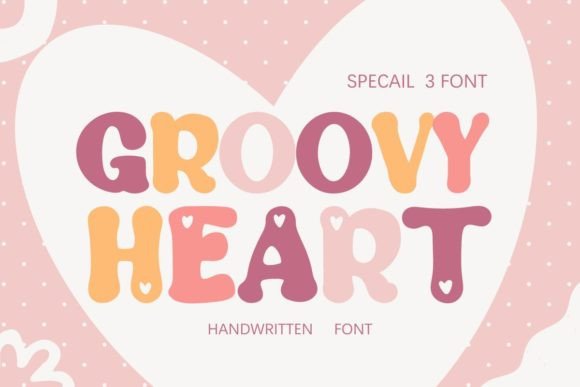
Enter the Groovy Heart font set. At first glance, it’s a stylish and playful duo—a pairing of a clean, modern display font with a complementary script that flows with a romantic, handwritten ease. But to call it just a “font” undersells its utility. This is a design asset built for storytelling. The display component offers crisp, legible characters perfect for headlines and branding, while the script, with its elegant swashes and ligatures, adds a layer of personal, handcrafted appeal. It’s this thoughtful combination that makes it so effective. You’re not just buying a single typeface; you’re investing in a typographic system that can carry an entire visual identity.
The real beauty lies in its application. Imagine a boutique wedding stationery brand. The clean display font can anchor the business name on a website header or the front of a greeting card, ensuring professionalism and readability. Then, the script font can swoop in for a tagline, a special offer, or the couple’s names on an invitation, instantly injecting that essential romantic, personal touch. This duality solves a common design challenge: how to maintain a cohesive brand voice across different contexts without resorting to a chaotic mix of unrelated fonts.
Practical Magic for Real-World Projects
So, where does Groovy Heart truly shine? Its strength is in projects where emotion and clarity need to coexist. For logo design, it offers a built-in pairing that ensures harmony. A small business, like a florist or a gift shop, can use the display font for the primary logotype and the script for a subtle descriptor, creating a mark that feels both established and approachable.
In packaging design, this font set is a workhorse. The display font can clearly communicate product information—flavors, sizes, instructions—while the script can highlight a "handmade" or "small-batch" quality on the label. It guides the customer’s eye naturally, from the essential details to the brand’s story. For social media graphics, it’s a game-changer. The display font creates bold, shareable quotes or announcements, while the script can add a friendly, conversational call-to-action like “Swipe up” or “Shop now.” This helps improve audience engagement by making graphics feel less corporate and more like a direct message from a friend.
Think about a blog focused on lifestyle or DIY crafts. Using Groovy Heart for post titles and pull quotes can dramatically enhance the site’s visual personality, making the content more memorable and reinforcing the creator’s brand. For digital products like planners, printable art, or social media templates, it provides an instant aesthetic upgrade that creators can sell, adding significant value. Even in editorial design, such as a magazine feature or a lookbook, the script can be used sparingly for stylistic emphasis, breaking up long blocks of text in a sans serif or serif font and adding a moment of visual delight.
Choosing and Using Your Creative Font Wisely
Adopting a new font, especially a premium font with multiple styles, requires a bit of strategy. First, explore everything included. A set like this often comes with alternates, swashes, and ligatures that unlock its full potential. The note that Groovy Heart is PUA encoded is key—it means accessing these special characters is straightforward, even in basic design software, allowing for easy customization without advanced typographic knowledge.
Font pairing is critical. While the set is designed to work together, you’ll often need a third, neutral font for body text. A simple, clean sans serif or a highly readable serif font will ground your design and ensure that longer paragraphs remain easy to read. The goal is visual consistency, not visual noise. Use the display font for hierarchy and the script for accent—never for a full paragraph.
Readability is non-negotiable. The playful, flowing nature of the script font means it’s best used at larger sizes for short bursts of text. Test it at the intended size on different devices and in print. A beautiful script that’s illegible at 12pt on a mobile screen fails its purpose. Always prioritize clear communication over stylistic flair for essential information.
Finally, consider your commercial licensing. If you’re using the font for client work, merchandise for sale, or digital products, ensure your license covers these uses. This isn’t just a legal formality; it’s part of professional practice and protects both you and your client. A font is a tool, and using it correctly ensures your brand identity remains both beautiful and compliant.
Building a Brand with Heart and Style
Ultimately, a typeface like Groovy Heart is a bridge. It connects a brand’s functional needs with its emotional aspirations. It helps a small business present itself with professional presentation while feeling uniquely human. It allows a content creator to develop a visual consistency that becomes instantly recognizable in a crowded feed. It turns a simple invitation into a keepsake and a product label into a story.
In the end, the best design choices are those that serve the project’s soul as much as its strategy. Choosing a font isn’t just about aesthetics; it’s about finding a voice. And sometimes, that voice needs to be a little bit groovy, and a whole lot of heart.