Beth Harmone: Where Blackletter Soul Meets Modern Elegance
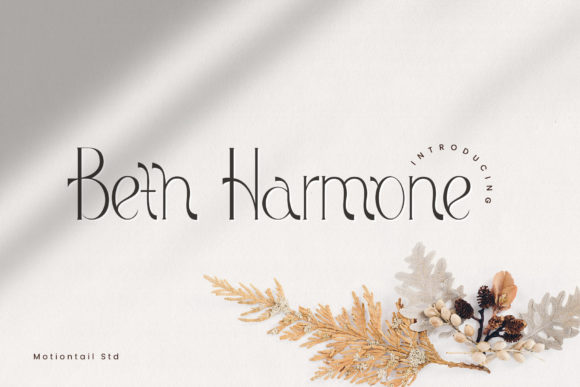
Imagine a font that carries the weight of history but speaks in a contemporary dialect. That’s the balance struck by Beth Harmone, a display typeface that doesn’t just sit on a page—it performs. For anyone working in branding, packaging, or editorial design, finding a font that feels both timeless and fresh is a rare discovery. Beth Harmone borrows the dramatic, ornamental strokes of blackletter calligraphy and reinterprets them through a sleek, modern lens. The result is a typeface with undeniable presence, designed for moments when you need your words to command attention.
At its core, Beth Harmone is about contrast and harmony. The letterforms feature the sharp, angular transitions and decorative flair reminiscent of gothic scripts, but they’re smoothed out and refined for today’s design applications. This isn’t a font you’d use for body text in a novel. It’s a premium display font, crafted for headlines, logos, and any creative project where typography is a central visual element. The included swashes and alternate glyphs, easily accessible thanks to PUA encoding, give you the flexibility to customize letterforms, adding a personal touch to titles or decorative elements without needing advanced design software skills.
A Typeface for Bold Branding and Memorable Identities
For entrepreneurs and small business owners building a brand from the ground up, Beth Harmone offers a powerful tool for visual identity. Think about a boutique distillery, a high-end jewelry line, or a craft coffee roaster. These brands often need to convey a sense of heritage, craftsmanship, and exclusivity. Using Beth Harmone for a logo or primary wordmark instantly injects a layer of sophisticated drama. The font’s blackletter-inspired accents suggest tradition and artistry, while its clean, modern execution keeps it from feeling archaic or illegible.
Beyond the logo, this typeface can unify an entire brand ecosystem. Use it for packaging design to make product names pop on a shelf. Apply it to social media graphics for launch announcements or quote cards that stop the scroll. When used consistently across a website’s hero section, business cards, and promotional posters, Beth Harmone helps build strong brand recognition. It becomes a signature visual element that audiences associate with your unique aesthetic.
Practical Applications Across Creative Projects
The versatility of a well-designed display font like this one extends far beyond corporate branding. Content creators and bloggers can leverage its striking style for featured image text, YouTube thumbnails, or Pinterest graphics that need to stand out in a crowded feed. Its dramatic flair makes it ideal for event invitations, wedding stationery, or concert posters where setting a specific mood is paramount.
For designers working on editorial layouts, consider using Beth Harmone for chapter titles, pull quotes, or section headers in a magazine or lookbook. It pairs beautifully with clean serif fonts or minimalist sans-serif fonts for body copy, creating a dynamic typographic hierarchy that guides the reader’s eye. In the realm of digital products, it can enhance the cover of an eBook, the title screen of an online course, or the branding for a series of downloadable templates.
- Logo & Wordmark Design: Creates immediate impact and a sense of bespoke quality.
- Packaging & Labels: Elevates product presentation on shelves and in online stores.
- Social Media & Marketing: Grabs attention for promotions, announcements, and quotes.
- Print Collateral: Adds sophistication to business cards, brochures, and posters.
- Event Invitations & Stationery: Sets an elegant, formal, or artistic tone.
- Editorial & Publishing: Provides striking headers for books, magazines, and blogs.
Mastering the Art of Font Pairing and Readability
Introducing a powerful display font like Beth Harmone into your toolkit requires a thoughtful approach to typography. The golden rule with ornate typefaces is to use them sparingly. They are best suited for short, impactful text—think headlines, subheadings, and single words or phrases. For longer paragraphs, always opt for a highly readable serif or sans-serif font. A classic pairing might be Beth Harmone for the title with a font like Lora or Open Sans for the supporting text.
Always test your pairings in context. View them on different screens and in print to ensure the contrast in style creates visual interest without conflict. Check the kerning and spacing, especially when using swashes, to maintain legibility. The goal is to create a visual conversation between the fonts, where the display font makes a statement and the body font delivers the information clearly.
Unlocking Creative Potential with Alternate Glyphs
One of the standout features of Beth Harmone is its PUA encoding. For the non-designer, this simply means all the fancy alternate letters and decorative swashes are readily available, often through the character map on your computer or within design software like Adobe Illustrator or Canva. This opens up a world of customization. You can swap a standard ‘A’ for one with a more elaborate flourish, or add a sweeping swash to the end of a word for a signature look.
This level of customization is invaluable for creating unique logos or monograms. It allows you to tailor the typography to perfectly match the personality of a project, whether it’s a romantic wedding invitation or a gritty, vintage-inspired poster. Experiment with these alternates to see how they can transform a simple word into a piece of typographic art.
Choosing the Right Font for Your Project Goals
Before selecting any font, including Beth Harmone, it’s crucial to align your typography with your project’s objectives and audience. Ask yourself: What emotion or message should this design convey? Who is trying to reach? A font with blackletter influences will evoke different feelings than a playful script or a geometric sans-serif. It’s best suited for projects aiming for elegance, drama, artistry, or a touch of historical charm.
Also, consider the practicalities of commercial licensing. If you’re using the font for client work or merchandise you intend to sell, ensure you have the appropriate commercial license. Beth Harmone is designed as a creative font for such professional applications, but verifying the license terms is a responsible step in any design workflow. By matching the font’s personality to your brand’s voice and understanding its technical capabilities, you can harness its full potential to create compelling, professional, and visually cohesive designs that truly resonate with your audience.