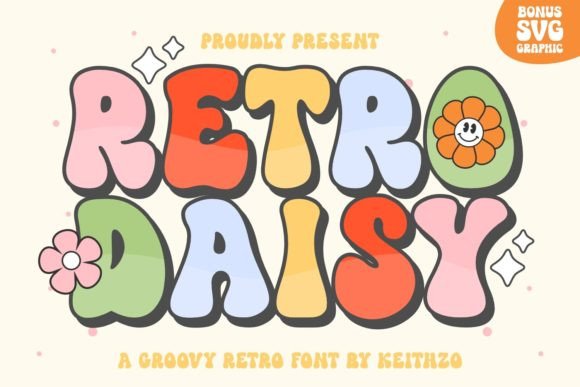
Retro Daisy: The Playful Display Font That Brings Joy to Design
There's something undeniably magnetic about a typeface that makes you smile before you've even read the words. That's the effect Retro Daisy has on viewers. This cute and quirky display font carries a joyful energy that transforms ordinary text into something memorable. Whether you're designing a bakery logo, crafting social media posts, or building a brand identity from scratch, this beautiful display font adds personality that generic typefaces simply can't match.
What sets Retro Daisy apart in a sea of available fonts? It blends nostalgic charm with a fresh, approachable aesthetic. The letterforms feel handcrafted yet polished, giving your creative projects that sweet spot between playful and professional. It's the kind of typeface that makes people pause mid-scroll, drawn in by its warmth and character.
Where Retro Daisy Truly Shines in Real Projects
Let's talk practical applications, because a font is only as good as the projects it elevates. Retro Daisy works beautifully across a surprising range of creative contexts, and understanding where it excels helps you make smarter design decisions.
Branding and Logo Design
If your brand personality leans toward approachable, fun, or artisanal, this typeface deserves serious consideration. Think about businesses like independent coffee shops, children's clothing lines, handmade soap companies, or boutique bakeries. Retro Daisy communicates warmth and authenticity without trying too hard. In logo design, it creates instant recognition. Customers see those distinctive letterforms and immediately associate them with your brand's personality.
The key with any premium font in branding is consistency. Once you select Retro Daisy for your primary display typography, use it consistently across your website headers, business cards, packaging, and marketing materials. This repetition builds the visual memory that turns first-time viewers into loyal customers.
Packaging and Product Design
Walk down any grocery aisle and notice which products catch your eye first. Often, it's the ones with distinctive typography that communicates personality at a glance. Retro Daisy excels on packaging because its quirky character reads well even from a distance. It works particularly well for product names, flavor descriptions, and tagline text on everything from jam jars to candle boxes to artisan chocolate wrappers.
Social Media Graphics and Digital Content
Content creators constantly battle for attention in crowded feeds. A creative font like Retro Daisy gives your graphics an immediate visual edge. Use it for Instagram quote posts, Pinterest pins, YouTube thumbnails, or Facebook promotional images. The font's joyful personality naturally encourages engagement because it feels inviting rather than corporate.
One practical tip for social media: pair Retro Daisy headings with a clean sans serif font for body text. This combination maintains readability while letting the display font do the heavy lifting visually. The contrast between a playful heading and straightforward body copy creates a balanced, professional presentation that audiences respond to positively.
Pairing This Typeface With Other Fonts
Font pairing is where many designers feel uncertain, but it doesn't need to be complicated. Since Retro Daisy is a display typeface with strong personality, it benefits from companions that complement rather than compete.
Consider these pairing approaches:
- With a simple sans serif: Fonts like Open Sans, Lato, or Montserrat provide clean readability for body text while letting Retro Daisy command attention in headlines. This works well for web design and editorial layouts.
- With a classic serif: Pairing with a traditional serif typeface creates an interesting tension between vintage and playful. Think Georgia or Playfair Display for body copy with Retro Daisy as your display hero. This approach suits editorial design and blog layouts beautifully.
- With a minimal script: For projects like wedding invitations or feminine branding, combining Retro Daisy with a subtle script font creates layered visual interest without overwhelming the viewer.
Always test your font pairings in context. What looks elegant in a font specimen sheet might feel cluttered on an actual poster or webpage. Print a sample, view it on different screens, and ask someone unfamiliar with the project for their honest reaction.
Practical Considerations Before You Commit
Choosing a typeface involves more than falling in love with how it looks in a preview image. Here are some grounded considerations that experienced designers factor into their decisions.
Readability at Different Sizes
Display fonts like Retro Daisy are designed primarily for larger text applications such as headings, titles, and logos. Test how it performs at the sizes you'll actually use. A typeface that looks gorgeous at 72 point might lose its charm at 24 point if the quirky details become muddled. For body text or small captions, you'll want to rely on a complementary serif font or sans serif alternative instead.
Review the Included Font Styles
Before purchasing any commercial font, check what's included in the package. Does it offer multiple weights? Are there alternate characters, ligatures, or stylistic variations? These extras give you creative flexibility. A font family with regular, bold, and italic options lets you create hierarchy and emphasis without introducing additional typefaces that might clash with your design.
Commercial Licensing
This matters more than many people realize, especially small business owners and entrepreneurs. If you're using a font for commercial purposes such as client work, product packaging, merchandise, or marketing assets, you need appropriate licensing. Review the license terms carefully. Does it cover digital products? Can you use it on merchandise for sale? Is it licensed per user or per project? Understanding these details upfront prevents legal headaches later and protects your business.
Making Your Designs Stand Out With Intentional Typography
Typography choices communicate volumes about your brand before anyone reads a single word. The fonts you select signal your values, your audience, and your level of attention to detail. A thoughtfully chosen typeface like Retro Daisy tells viewers that you care about craft, that your brand has personality, and that you've put genuine thought into how your message reaches people.
Consider how different industries might use this font effectively. A children's party planner could use it across invitations, thank you cards, and social media promotions to create a cohesive visual identity. A vintage-inspired clothing brand might feature it prominently on hang tags, website banners, and email newsletters. A food blogger could use it for recipe titles and cookbook layouts, creating that handcrafted feel that resonates with home cooking audiences.
The real power of any design asset lies in how strategically you deploy it. Don't scatter a display font randomly across every element of a project. Instead, use it deliberately for maximum impact. Reserve Retro Daisy for your most important text such as headlines, brand names, and calls to action. Let simpler typography handle supporting information. This hierarchy guides the viewer's eye naturally and creates a polished, intentional design that builds trust with your audience.
When you add this beautiful display font to your creative toolkit and use it with purpose, you'll notice how it transforms projects from forgettable to distinctive. That's the mark of a genuinely useful typeface one that doesn't just look appealing in isolation but actively improves the work you produce and the impression you leave on the people who encounter it.